

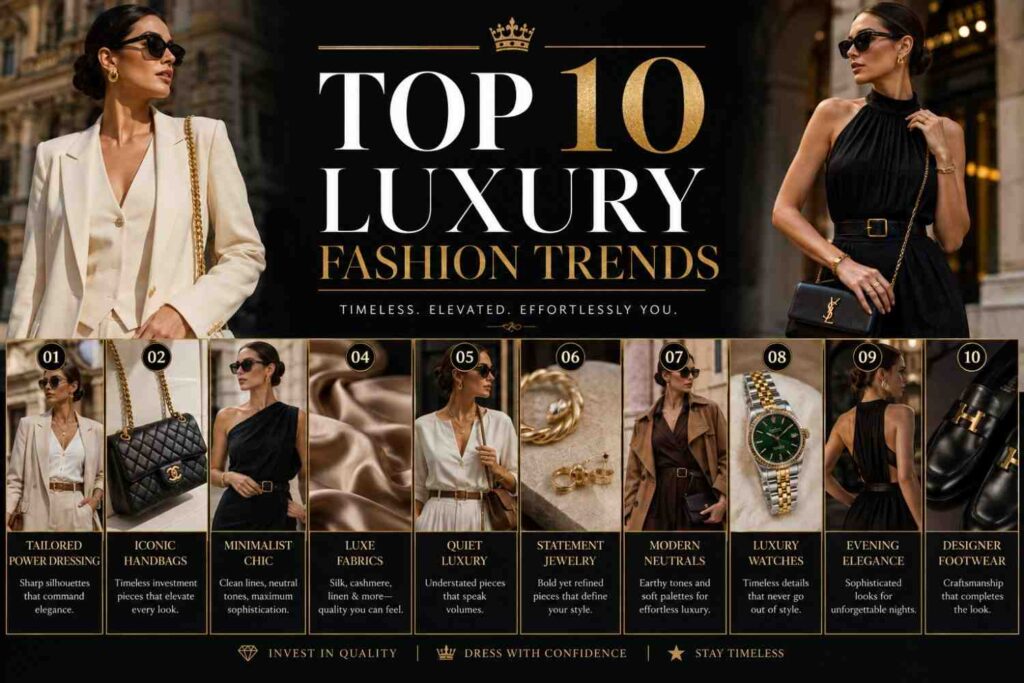
Top 10 Luxury Fashion Trends That Define Modern Style
Luxury fashion is no longer just about exclusivity or high price tags. It has evolved into a global language of identity, culture, and innovation. The Top 10 Luxury Fashion Trends today reflect a powerful mix of tradition and modern creativity, where craftsmanship meets technology and sustainability meets style.
In today’s fashion world, luxury is defined by experience rather than excess. People are choosing quality over quantity, timeless design over fast trends, and meaningful storytelling over loud branding. From runway innovations to street-style influence, luxury fashion is becoming more personal, expressive, and conscious than ever before.
This expanded guide explores the most important luxury fashion movements shaping 2026 and beyond, helping you understand not only what is trending but also why these trends matter in the global fashion ecosystem.
The Evolution of Luxury Fashion Trends
Luxury fashion has gone through a massive transformation over the past few decades. Earlier, it was limited to elite couture houses and seasonal runway shows. Today, it is a global industry influenced by digital platforms, street culture, and sustainability movements.
Modern consumers are more aware and selective. They expect transparency, ethical production, and long-lasting value. Because of this shift, luxury brands have moved from pure exclusivity to experience-driven fashion.
Another important change is digital influence. Social media, virtual fashion shows, and AI-driven design tools have made fashion more accessible and dynamic. Luxury is no longer just about wearing expensive clothes—it is about expressing identity through carefully curated aesthetics.
From Classic Couture to Modern Luxury
Classic couture was built on handcrafted excellence, exclusivity, and detailed artistry. Fashion houses like Chanel and Dior defined elegance through custom-made garments for elite clients. Every piece was a symbol of status and craftsmanship.
Modern luxury, however, has expanded beyond couture salons. Ready-to-wear collections now dominate the market, offering high-quality fashion that is both wearable and stylish. Designers are focusing on blending comfort with sophistication, allowing luxury fashion to fit everyday life.
Today’s consumers want fashion that is practical yet premium. This shift has created a balance between traditional craftsmanship and modern lifestyle needs, making luxury more inclusive and globally relevant.
Influence of Global Culture on Fashion
Global culture has become one of the strongest forces shaping luxury fashion. Designers now take inspiration from different regions, blending African prints, Asian silhouettes, European tailoring, and Middle Eastern craftsmanship into unified collections.
This cultural fusion has made fashion more diverse and expressive. It also reflects a global audience that values representation and inclusivity. Fashion is no longer dominated by one region; instead, it is shaped by worldwide creativity.
Social media has accelerated this influence. Trends now spread instantly across countries, making luxury fashion more interconnected and fast-moving than ever before.
Digital Transformation in Luxury Fashion
Technology has completely reshaped luxury fashion. Brands now use AI tools for design predictions, virtual fittings, and personalized styling recommendations. Digital fashion shows allow global audiences to experience collections without physical attendance.
In addition, virtual clothing is becoming popular in gaming and metaverse platforms. Consumers can now wear digital outfits in online environments, expanding the definition of fashion beyond physical clothing.
This transformation shows that luxury fashion is entering a new era where creativity and technology work together.
Sustainable Luxury Fashion Takes the Lead
Sustainability has become one of the most important forces shaping modern luxury fashion. In today’s fashion industry, it is no longer optional or secondary—it is a core requirement. Consumers are now more aware of environmental issues and actively demand eco-friendly materials, ethical production methods, and transparent supply chains from luxury brands.
This shift is driven by a combination of environmental responsibility and changing consumer expectations. High-end buyers are no longer satisfied with just premium design or exclusivity; they also want brands that reflect ethical values and long-term responsibility. As a result, sustainability has become an essential part of luxury identity, redefining what it means to be a “luxury” brand in the modern world.
From innovative fabrics to circular production systems, sustainability is transforming every stage of fashion—from design and manufacturing to consumption and resale. This change is not just a trend but a permanent evolution in the luxury industry.
Eco-Friendly Fabrics and Materials
Eco-friendly fabrics are revolutionizing the foundation of luxury fashion. Designers and brands are increasingly using sustainable materials such as organic cotton, recycled polyester, hemp, bamboo fibers, and vegan leather in their high-end collections.
These materials are designed to reduce environmental impact while still maintaining the premium quality expected from luxury fashion. Unlike traditional fabrics that require high water usage and chemical processing, eco-friendly alternatives are created with sustainability in mind without compromising comfort, durability, or style.
In addition, fashion innovators are developing bio-fabrics made from natural or lab-grown sources, which further reduce pollution and waste. These advanced materials allow luxury brands to experiment with new textures and designs while staying environmentally responsible.
Overall, eco-friendly materials are helping reshape luxury fashion into a more responsible, innovative, and future-focused industry
Ethical Production Practices
Ethical production is a key pillar of sustainable luxury fashion. It ensures that every stage of garment creation—from sourcing raw materials to final production—is carried out responsibly and fairly.
Luxury brands are now focusing on fair wages, safe working conditions, and responsible labor practices across their supply chains. This shift has been driven by increasing consumer awareness and demand for transparency in how fashion products are made.
Today’s customers want to know the full story behind their clothing—where it was made, who made it, and under what conditions. In response, many brands now publish sustainability reports and obtain ethical certifications to prove their commitment to responsible practices.
Ethical production not only improves brand reputation and trust but also redefines luxury as something meaningful, responsible, and socially conscious rather than purely aesthetic or expensive.
Circular Fashion Economy
The circular fashion economy is transforming how luxury clothing is used, reused, and valued over time. Instead of following a traditional “buy, wear, and discard” model, circular fashion focuses on extending the life cycle of garments through reuse, resale, recycling, and upcycling.
In this system, luxury items are designed to last longer and retain their value. Consumers are increasingly participating in resale markets where high-end fashion pieces are bought and sold multiple times, often maintaining or even increasing their value.
This resale culture has become especially popular for luxury handbags, shoes, and limited-edition collections. It not only reduces textile waste but also promotes a more sustainable and intelligent fashion ecosystem.
By encouraging longevity and reuse, the circular fashion model is helping luxury brands move toward a more environmentally responsible future while also creating new economic opportunities within the fashion industry.
Luxury Fashion Evolution
| Era | Focus | Key Driver | Example |
|---|---|---|---|
| 1990s | Logos & status | Brand identity | Gucci monograms |
| 2000s | Celebrity culture | Media influence | Red carpet looks |
| 2010s | Streetwear rise | Youth culture | Off-White |
| 2020s | Sustainability | Conscious buyers | Eco fashion |
| 2026+ | Tech + identity | AI + digital culture | Virtual fashion |
Quiet Luxury and Minimalist Elegance
Quiet luxury has become one of the most powerful and influential fashion movements in modern style culture. It represents a shift away from flashy branding and loud logos toward subtle sophistication, timeless design, and exceptional craftsmanship. Instead of showing wealth through visible labels, quiet luxury focuses on quality, fit, fabric, and detail.
This trend reflects a deeper change in consumer mindset. Modern fashion buyers are increasingly interested in long-term value rather than short-term trends. They prefer pieces that feel elegant, versatile, and refined without being overly attention-seeking. Quiet luxury has therefore become a symbol of confidence, maturity, and effortless style.
Minimalist fashion is closely connected to quiet luxury, as both share the same philosophy of “less is more.” Clean lines, neutral color palettes, and simple yet powerful silhouettes define this aesthetic, making it one of the most timeless approaches in fashion.
What Is Quiet Luxury?
Quiet luxury is a fashion style that focuses on understated elegance rather than visible branding or logos. It emphasizes high-quality materials, expert tailoring, and timeless design that remains stylish for years.
Unlike trend-driven fashion, quiet luxury is not about standing out loudly but about presenting refined taste in a subtle way. It represents confidence that does not rely on external validation or attention-seeking design.
This style is especially popular among professionals, high-income consumers, and fashion-conscious individuals who prefer a sophisticated and polished appearance. It reflects a lifestyle built on elegance, simplicity, and long-term thinking rather than fast-changing trends.
Minimalist Wardrobe Staples
A minimalist wardrobe is built around essential, versatile clothing pieces that can be styled in multiple ways. Instead of owning a large number of outfits, the focus is on fewer but higher-quality garments that offer maximum flexibility.
Key wardrobe staples include tailored coats, silk shirts, structured trousers, neutral blazers, simple dresses, and classic knitwear. These items are designed to work together seamlessly, creating multiple outfit combinations with minimal effort.
The goal of minimalism is not restriction but refinement. By reducing unnecessary clothing and focusing on quality essentials, individuals can create a more organized, efficient, and stylish wardrobe that lasts for years without going out of fashion.
Why Minimalism Is Trending
Minimalism is becoming increasingly popular because modern consumers are moving away from fast fashion and excessive consumption. People are now more aware of sustainability issues, overproduction, and environmental impact caused by the fashion industry.
As a result, many are choosing to invest in fewer but better-quality items that provide long-term value. This shift also reflects a lifestyle change where simplicity, clarity, and intentional living are becoming more important.
Minimalism also makes daily dressing easier and more efficient. With a well-curated wardrobe, individuals can create elegant looks without stress or confusion. Overall, it represents a balance between style, practicality, and sustainability, making it one of the most important fashion movements today.
Luxury Streetwear Revolution
Luxury streetwear has become one of the most influential movements in modern fashion, blending casual comfort with high-end luxury design. It breaks traditional fashion rules by combining everyday street style elements like sneakers, hoodies, oversized silhouettes, and graphic designs with premium materials and exclusive branding.
This fusion has completely reshaped modern fashion culture. What was once considered casual or informal is now featured in luxury runways and high-fashion collections. Today, luxury streetwear represents a lifestyle that values comfort, individuality, and self-expression while still maintaining a premium and stylish identity.
This trend is especially popular among younger generations who see fashion as a form of identity rather than just clothing. It reflects creativity, confidence, and cultural awareness, making it one of the fastest-growing segments in the luxury industry.
Brand Collaborations
Brand collaborations are one of the key drivers of the luxury streetwear movement. High-end luxury fashion houses often partner with streetwear designers, artists, or even sports brands to create exclusive, limited-edition collections.
These collaborations combine creativity from different fashion worlds, resulting in unique designs that appeal to both luxury buyers and streetwear fans. Because of their limited availability, these collections often sell out within minutes and become highly valuable collector’s items in resale markets.
Such partnerships also help luxury brands stay relevant among younger audiences. By embracing street culture, music, and digital influence, luxury labels can expand their reach and maintain cultural influence in a rapidly changing fashion landscape.
Sneakers as Luxury Icons
Sneakers have evolved from simple sportswear into one of the most powerful symbols of luxury fashion. Limited-edition releases, designer collaborations, and rare colorways have transformed sneakers into high-value fashion assets.
Many luxury sneakers are now seen as status symbols, representing exclusivity and personal style. High-demand releases often generate long waiting lists and sell for significantly higher prices in resale markets.
Beyond fashion, sneakers are also considered investment pieces. Collectors and enthusiasts treat rare models like valuable assets, similar to luxury watches or handbags. This has made sneakers a central part of modern luxury culture.
Youth Influence on Fashion Trends
Younger generations play a major role in shaping luxury streetwear trends. Their preferences are driven by comfort, individuality, and digital culture rather than traditional fashion rules.
Social media platforms like Instagram, TikTok, and YouTube have made fashion more accessible and fast-moving. Trends spread globally within hours, allowing youth culture to directly influence luxury brands and runway designs.
This generation values authenticity and self-expression, often mixing high-end luxury pieces with everyday streetwear to create unique personal styles. Their influence has pushed luxury fashion to become more inclusive, diverse, and experimental than ever before.
Statement Accessories and Bold Aesthetics
Accessories play a very important role in modern luxury fashion, often becoming the defining element of an outfit. In today’s fashion world, even a simple outfit can be transformed into a high-end luxury look through the right accessories. Statement pieces such as bold jewelry, designer handbags, sunglasses, belts, and artistic details are now considered essential parts of luxury styling rather than just add-ons.
Luxury fashion increasingly focuses on individuality, and accessories are one of the easiest ways to express personal style. They help create a strong visual identity and allow people to stand out while still maintaining elegance and sophistication. From runway shows to street fashion, bold aesthetics are now a major trend shaping the luxury industry.
Oversized Jewelry
Oversized jewelry has become a powerful fashion statement in luxury styling. It includes chunky necklaces, large rings, bold earrings, and sculptural bracelets that instantly draw attention.
These pieces are designed not just as accessories but as wearable art. They add drama, confidence, and personality to even the simplest outfits. Many luxury brands are experimenting with unique shapes, metallic finishes, and artistic designs to create jewelry that feels expressive and modern.
Oversized jewelry is especially popular in fashion shows and celebrity styling because it creates a strong visual impact and enhances the overall luxury aesthetic.
Luxury Handbags as Investments
Luxury handbags are no longer just fashion items—they are now considered valuable investment pieces. Many high-end bags from brands like Chanel, Hermès, and Louis Vuitton often retain or even increase their value over time.
This makes them highly desirable in both fashion and resale markets. Limited editions and iconic designs are especially sought after, as they can become rare collectibles.
Consumers now view luxury handbags as a combination of style and financial value. Owning the right piece not only enhances a wardrobe but can also serve as a long-term asset, making handbags one of the most powerful symbols of modern luxury fashion.
Fashion Details Matter
In luxury fashion, small details make a big difference. Elements such as embroidery, stitching quality, fabric texture, metallic accents, and finishing touches significantly enhance the overall design.
These subtle details reflect craftsmanship and attention to detail, which are the core values of luxury fashion. Even when designs appear simple, the quality of materials and precision in construction create a premium look and feel.
Modern luxury consumers are highly detail-oriented, and they can easily recognize fine craftsmanship. This is why brands invest heavily in perfecting every small element of their designs to maintain exclusivity and high value.
Material Innovation in Luxury Fashion
| Material | Benefit | Usage |
|---|---|---|
| Organic Cotton | Eco-friendly | Clothing basics |
| Vegan Leather | Animal-free | Bags & jackets |
| Recycled Fabric | Waste reduction | Streetwear |
| Smart Textiles | Functional | Tech fashion |
Quick Answer About Top 10 Luxury Fashion Trends
The Top 10 Luxury Fashion Trends represent the most influential directions shaping the global fashion industry in 2026. These include quiet luxury, sustainable fashion, luxury streetwear, vintage revival, statement accessories, digital fashion, minimalist tailoring, celebrity-driven styles, smart fabrics, and cultural fusion.
Together, these trends reflect a major shift in how luxury is defined today. Instead of focusing on visible logos, excessive branding, or purely expensive materials, modern luxury now emphasizes quality, craftsmanship, sustainability, and individuality. Consumers are increasingly drawn to fashion that tells a story, reflects personal identity, and aligns with ethical values.
In 2026, luxury fashion is being shaped by three powerful forces: technology, global cultural exchange, and eco-conscious design. Artificial intelligence, virtual fashion experiences, and smart textiles are redefining how clothing is designed and worn. At the same time, cultural diversity is influencing design aesthetics, while sustainability is becoming a core expectation rather than an optional feature.
FAQ – Top 10 Luxury Fashion Trends
The FAQ section about Top 10 Luxury Fashion Trends covers the most commonly asked questions related to modern luxury fashion, including its key characteristics, current trends, and future direction. It helps readers quickly understand how luxury fashion is evolving in 2026, especially in terms of sustainability, minimalism, streetwear influence, and digital transformation.
Luxury fashion today is no longer limited to high price tags or brand names. Instead, it focuses on quality, craftsmanship, individuality, and ethical values. This FAQ section explains the most important questions people have about these changes in simple and clear terms, making it easier to understand the modern fashion industry and its direction.
What defines luxury fashion today?
Luxury fashion today is defined by quality, craftsmanship, sustainability, and individuality rather than logos or status symbols. It focuses more on how a product is made, the materials used, and the long-term value it provides instead of just brand visibility.
Modern luxury also reflects lifestyle and personal identity. People now prefer timeless, well-crafted pieces that can be worn in multiple ways rather than fast-changing seasonal trends. Ethical production, transparency, and sustainability have also become important parts of what makes a brand “luxury” in today’s world.
Is quiet luxury still trending?
Yes, quiet luxury is still one of the strongest fashion trends and continues to dominate in 2026. It is based on simple, elegant, and high-quality clothing that avoids visible logos and flashy branding.
This trend is popular because it represents confidence without the need for attention. It focuses on premium fabrics, perfect tailoring, and minimalist design. Many professionals, celebrities, and fashion-conscious consumers prefer quiet luxury because it offers a timeless wardrobe that never goes out of style.
It is also closely linked with sustainability and minimalism, as it encourages buying fewer but better-quality items.
Why is sustainable fashion important?
Sustainable fashion is important because it helps reduce the environmental damage caused by the fashion industry. Traditional clothing production leads to high water usage, pollution, and massive textile waste.
Sustainable fashion promotes eco-friendly materials, recycling, and ethical manufacturing practices. It also ensures fair wages and safe working conditions for workers in the supply chain.
By choosing sustainable fashion, both brands and consumers contribute to a cleaner environment and a more responsible global fashion industry. It also supports long-lasting clothing that reduces overconsumption and waste.
Are luxury streetwear trends still growing?
Yes, luxury streetwear is still growing rapidly and remains one of the most influential fashion movements today. It combines casual street style with high-end luxury elements such as designer sneakers, oversized fits, hoodies, and exclusive collaborations.
This trend is driven mainly by younger generations who value comfort, individuality, and cultural expression over traditional formal fashion rules. Social media platforms, influencers, and celebrities continue to boost its popularity worldwide.
Luxury streetwear is also evolving into an investment category, where limited-edition items often increase in value over time, making it both a fashion statement and a collectible market.
Conclusion
The Top 10 Luxury Fashion Trends show how fashion is changing into something more meaningful and modern. Today, luxury is not just about expensive clothing, it is about identity, creativity, and conscious lifestyle choices.
From quiet luxury and minimalism to streetwear and digital fashion, the industry is becoming more diverse, innovative, and sustainable. Technology, global culture, and environmental awareness are shaping the future of fashion.
In the end, luxury fashion is no longer just about what you wear, it is about how you express yourself and the values you represent through your style.